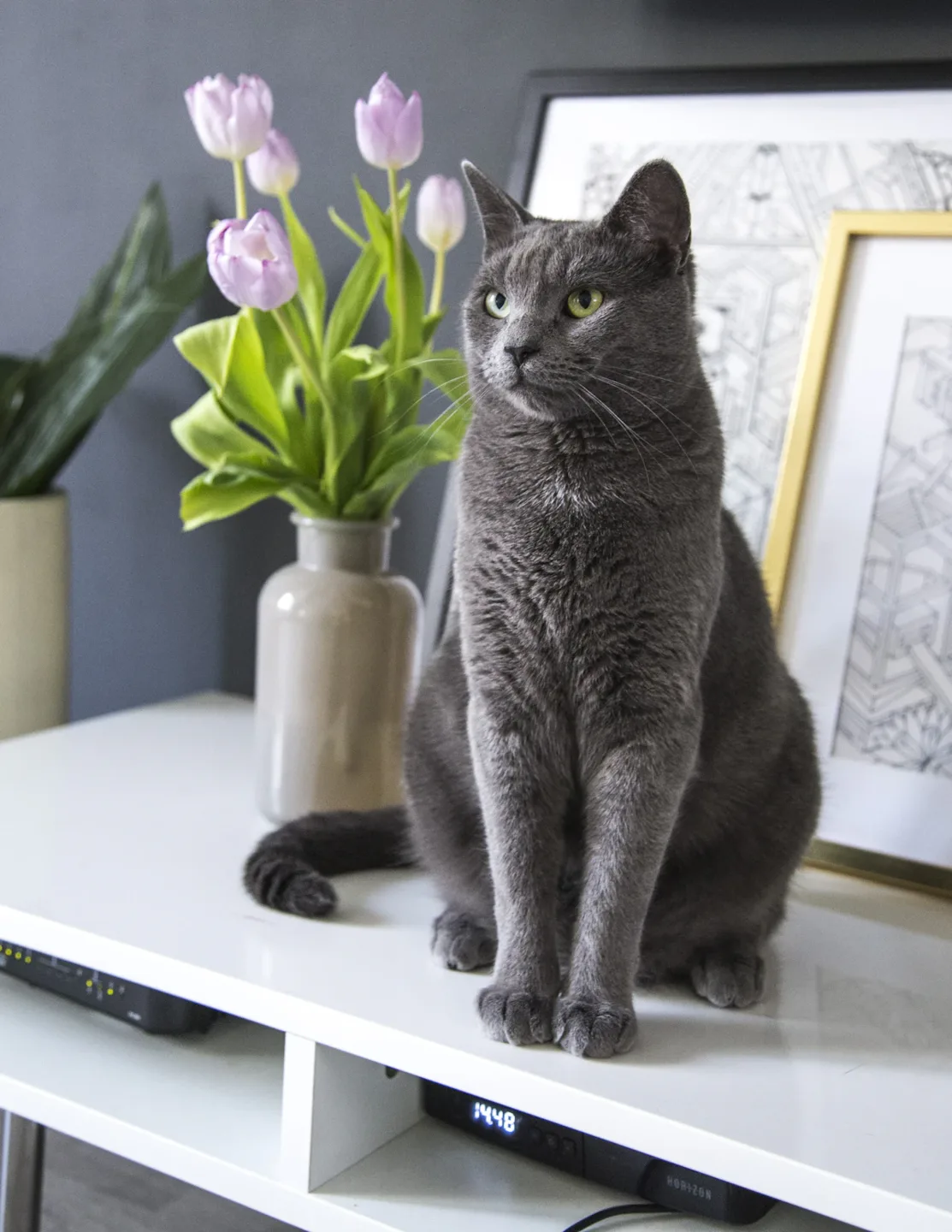

Shopping for a Multi-Cat Home Without Crowding One Corner
Plan separate feeding, resting, and toileting locations before buying matching sets of cat supplies.
Published September 7, 2026
Some links may earn us a commission if marked as affiliate links. Unmarked retailer links are ordinary searches. Our advice is based on research and practical selection criteria, not hands-on product testing. How this works.
Two cats share a home, but one reaches the kitchen first and the other waits in the hallway. Buying a bigger double bowl may keep the corner tidy while leaving the same access problem in place. A multi-cat shopping list works best when it starts with a map of routes and resources, rather than a matching accessory collection.
Map where each cat actually spends time
Sketch the rooms and mark food, water, toilets, resting places, hiding spaces, and scratching surfaces. Add doorways and narrow passages where one cat can pause and block movement. Observe ordinary mornings and evenings rather than assuming cats that sleep near each other always want to share every resource.
Cats Protection recommends separate resources in different parts of a home. Use that principle to identify a missing location before choosing a product. If every bowl is lined up in the kitchen, another bowl in the same row may not improve access. A simple additional station in a suitable quiet area can offer more choice than replacing the entire set with a larger coordinated design.
Spend on distribution before elaborate furniture
Compact standalone bowls, washable beds, and practical scratchers are easy to place in several locations. A large tower offers several surfaces but still concentrates activity in one footprint. Check whether its platforms have independent approaches or require one cat to pass directly by another. The same question applies to a furniture enclosure containing several litter trays behind one entrance.
Buy pieces that you can reposition while learning the household’s preferences. Matching colors are optional; useful access is the priority. If floor space is limited, examine existing stable resting surfaces before adding furniture. Elevated options need safe approaches and exits, and some cats may prefer lower spots. A resource plan should accommodate those differences rather than asking every cat to use the same route.
Make separate feeding workable every day
If different foods are needed, plan how you will prepare, place, and remove each meal. Distinct rooms may be more useful than a specialized device, provided the routine is practical and each cat is comfortable. Label storage clearly so a pet sitter can follow the arrangement without guessing. Separate measuring tools can reduce everyday mix-ups.
Microchip-operated feeders are an option to compare when individual access is needed, but check compatibility, opening behavior, cleaning, power requirements, and available support. They still require supervision during introduction and do not replace observation of who eats. Start with the simplest arrangement that reliably meets the household’s feeding needs, then consider equipment when it solves a clearly identified problem.
Review access after the shopping is done
For a week, notice which locations are used, whether a cat waits outside a doorway, and whether furniture has narrowed an established path. Do not interpret an unused bed as proof that more beds are needed. Temperature, disturbance, visibility, and the approach can matter as much as the product. Change one location at a time where practical.
Keep a simple written care map for visitors or sitters, including cleaning and refill tasks. That map helps preserve useful separation when another person looks after the cats. If tension or avoidance persists, seek appropriate veterinary or behavior advice. The purchase plan can provide resources and choices, but no accessory bundle guarantees that cats will comfortably share a household.
Compare your options
These are supply types to consider, not ranked products. Check the individual item’s dimensions, materials, care instructions, and return policy before ordering.
| Option | Useful when | Tradeoff |
|---|---|---|
| Separate washable cat feeding bowlsSimple starting point | Households arranging distinct meal locations and wanting simple pieces that can move as the layout improves. | Multiple locations create more refill and washing stops. A written routine helps prevent one station being overlooked during a busy day. |
| Compact standalone cat scratching postsAlternative to compare | Homes that need scratching opportunities in different rooms rather than a single large activity center. | Each post still needs a stable base and useful height. Buying several undersized posts does not compensate for poor construction. |
| Microchip-controlled cat feederFor a different household | Situations requiring individual food access after checking device compatibility and the practical introduction routine. | Cost, batteries or power, cleaning, and learning the opening mechanism add work. Keep monitoring meals rather than assuming the device solves every access issue. |
Before you add it to the basket
- Map resources and narrow access routes.
- Provide choices in separate useful locations.
- Check each cat’s actual use over time.
- Write a clear routine for a pet sitter.
Common questions
Do two bowls beside each other count as separate stations?
They are separate objects but share one location and approach. Consider whether either cat can access food without passing the other. Depending on the home, placing bowls in different suitable areas may create more meaningful choice than adding another bowl to the same tray.
Should all supplies be identical?
Consistency can simplify cleaning, but different cats may prefer different surfaces or resting heights. Use identical basics when they work, and choose alternatives where observation supports a different need. Avoid replacing a successful resource solely to make the room look more coordinated.
Further reading & sources
Our shopping guidance is editorial interpretation. These resources offer additional care context. Sources checked September 7, 2026.